
How the Rise of Vaping Impacts Air Quality Indoors and Out: How You Can Help
Vaping is often marketed as the “cleaner” alternative to smoking. No ash, no lingering smell and no visible smoke clouds hanging in the air. But the reality is cleaner doesn’t always mean harmless, especially when it comes to air quality. As vaping becomes more common, its environmental footprint is becoming harder to ignore.
Why Vaping Changes the Air You Breathe
Vape aerosol looks like nothing more than water vapor. However, that assumption is one of the biggest misconceptions driving its widespread indoor use.
Vaping releases a complex mixture of substances into the air. These include fine particles, nicotine, heavy metals and volatile organic compounds (VOCs). Some of these substances are present at lower levels than traditional cigarette smoke, but that doesn’t make them insignificant, especially in enclosed spaces.
Research shows vaping introduces undesired substances into indoor environments, raising concerns about air quality and secondhand exposure. Unlike smoke, which people instinctively avoid, vape clouds often go unnoticed. That makes exposure easier and more frequent.
Indoors — Where Vaping Has the Strongest Impact
Indoor environments are where vaping’s effects are most concentrated due to limited ventilation. When someone vapes in a room, pollutants accumulate rather than disappear. While there’s still limited research on vaping, smoking cigarettes indoors is more dangerous for your health than inhaling exhaust smoke.
Even more concerning is how long these particles linger. While some dissipate quickly, others settle onto surfaces, creating what’s known as “thirdhand exposure.” This residue can remain on furniture, carpets and even skin. That’s a hidden risk for children and pets.
Outdoors — A Smaller, Yet Still Significant Impact
Outdoors, vaping doesn’t create the same buildup as it does indoors. Open air allows pollutants to disperse quickly. But it doesn’t mean there’s no impact. In crowded outdoor spaces, such as cafes or public transport stops, localized air quality can still be affected, especially when multiple people are vaping at once.
There’s also the issue of cumulative exposure. As vaping becomes more common, these small, repeated emissions begin to add up. It’s similar to vehicle emissions — one car doesn’t change much, but thousands do. While outdoor exposure is generally lower risk than indoor exposure, it still contributes to the broader air pollution issue.
Secondhand and Thirdhand Exposure
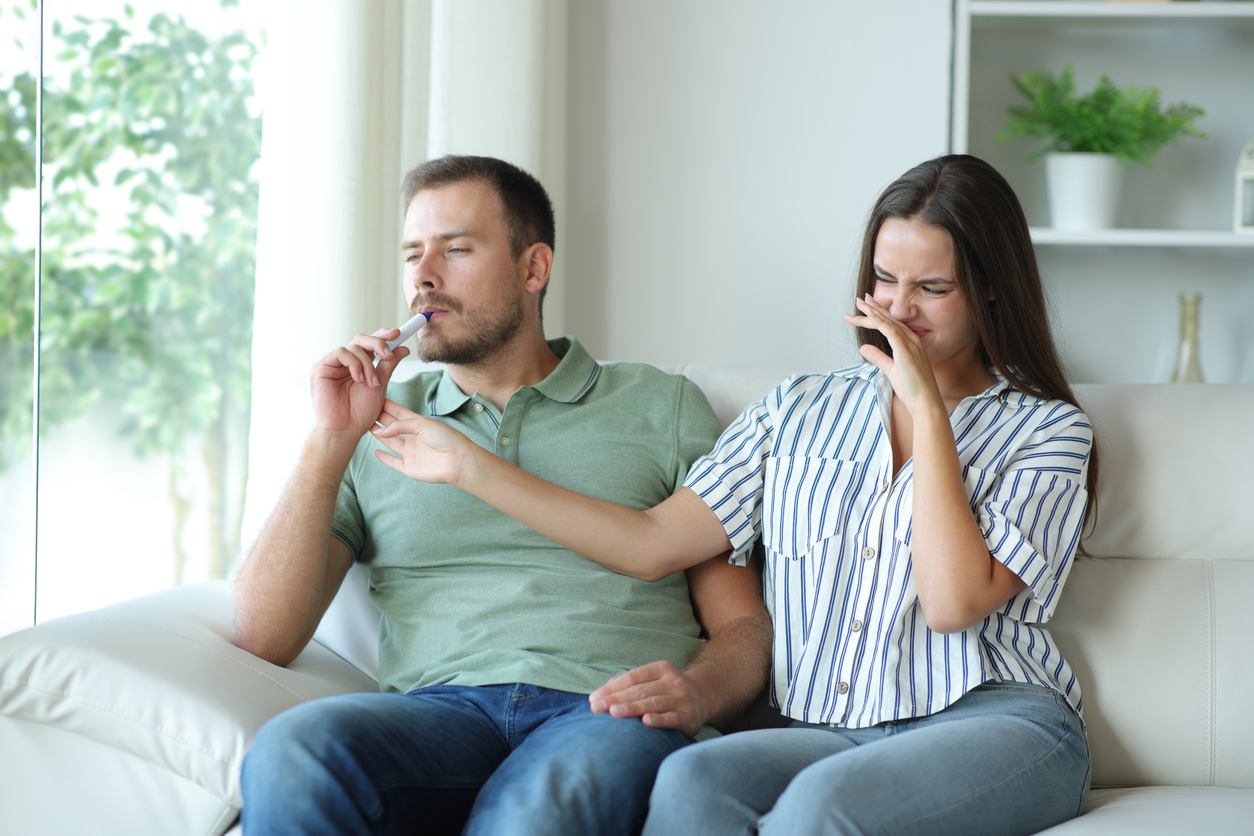
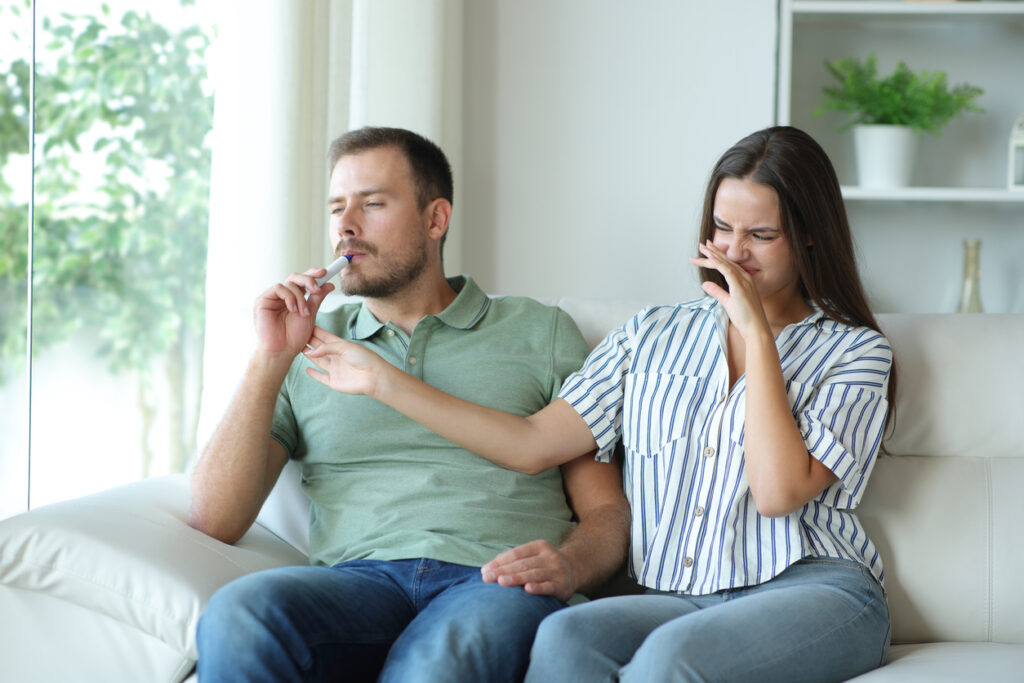
One of the biggest shifts vaping has introduced is the normalization of passive exposure. People who would never accept cigarette smoke indoors often tolerate vaping. Sometimes, they don’t even realize they’re inhaling it.
Secondhand vaping means breathing in aerosols containing nicotine, fine and ultrafine particles, and toxic compounds like benzene and aldehydes. Even if the concentrations are lower than cigarette smoke, repeated exposure matters, especially for vulnerable groups like children, pregnant women and people with respiratory conditions. In fact, smoking while trying to get pregnant can make it more challenging to conceive.
Thirdhand exposure is what remains after the cloud dissipates. Residue on surfaces can be touched, ingested or re-released into the air later. While easy to overlook, it is increasingly recognized as part of the overall exposure risk.
This impact isn’t limited to bystanders. People who vape are increasingly reporting symptoms like trouble breathing, chest pain, shortness of breath and even serious conditions, such as popcorn lung. While research is still evolving, these symptoms highlight that what’s being released into the air and into the lungs isn’t harmless.
Why This Matters More Than Ever
Indoor air quality is already a major global health concern. Unlike industrial pollution or traffic emissions, this is a source you can directly control. It happens in your homes, cars and shared spaces. And because it doesn’t smell as harmful, it often goes unchecked.
How You Can Help Improve Air Quality
Fortunately, small changes can make a real difference. Air quality, particularly indoors, is highly responsive to behavior. Here’s where you can start:
- Keep vaping outdoors whenever possible, just like traditional smoking.
- Avoid vaping in enclosed or poorly ventilated spaces, especially around others.
- Improve ventilation by opening windows or using mechanical systems.
- Use air purifiers with HEPA filters to reduce airborne particles and improve air quality.
- Set clear household rules about vaping indoors, especially if children are present.
- Get, and stay, informed about what’s actually in vape aerosol.
Clearing the Air
While some consider vaping to be less harmful than smoking, it’s far from harmless. Indoors, it can quickly degrade the air you breathe. Outdoors, it contributes to a growing background of pollutants. The rise of vaping has changed social norms, but it’s time for awareness to catch up.

Post a comment